Resources
Insights
Australian Energy & Environmental Market Update - December 2025

Australian Energy & Environmental Market Update - December 2025

The latest edition of our monthly Australian Energy & Environmental Market Update is now available. Keep reading for energy and environmental price movements, policy updates and other news.

Updated
January 14, 2026
Published
January 14, 2026
Australian Energy & Environmental Market Update - December 2025

Australian Energy & Environmental Market Update December 2025

Highlights from this edition

Electricity markets

  • Average monthly spot prices softened across the NEM, with the NEM-wide VWAP falling 9% to $52.82/MWh, the lowest in 2025. Prices eased across all states except TAS, where they rebounded but remained below the CY25 average.
  • Futures softened across the curve, with Cal26 and Cal27 contracts falling sharply, particularly for QLD Cal26 (-$7.09/MWh) and NSW Cal26 (-$4.65/MWh).
  • NEM-wide wind capacity factors rose to 28%, supporting stronger dispatch-weighted prices and merchant revenue, particularly in TAS.

Environmental markets

  • LGCs softened, drifting from low-$7/cert to mid-$6/cert amid thin liquidity and year-end selling.
  • STC pricing remained stable, with the Clearing House surplus rising from ~2m to >3m certificates by mid-month.
  • VEEC spot values fell below $80/tCO2-e, with early-December volatility easing into a flat forward curve.
  • ESC spot extended declines to low-$22/MWh before a mid-month NSW announcement briefly lifted prices to ~$23/MWh.
  • PRC trading was intermittent, picking up mid-month and closing at $2.88/certificate on policy-driven activity.

Market news

  • Key market developments this month included the release the final Nelson Review and the annual Gas Market Review.

Australian electricity spot market

Monthly electricity spot market trends

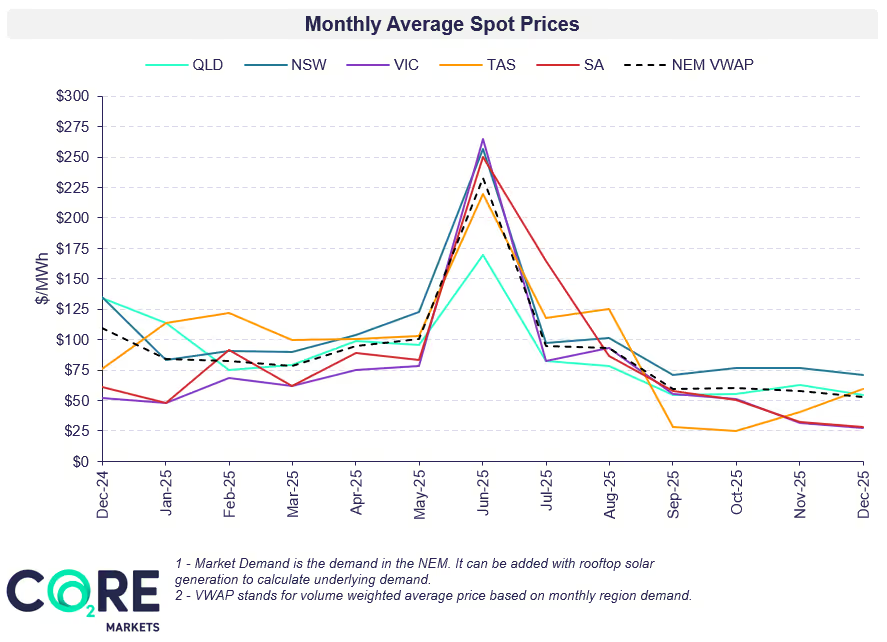
  • The NEM-wide volume weighted average price (VWAP) softened again this month, falling 9% to $52.82/MWh. December recorded the lowest VWAP of 2025 and was 52% lower than December last year.
  • All states experienced a month-on-month softening in spot prices, except for TAS. TAS spot prices rebounded again this month, rising back to stable levels, however still 62% lower than CY25 average price. This follows high levels of rainfall in TAS during the spring months, with December hydro output dropping by 10%.
  • QLD and VIC recorded the most notable price drops, with monthly average spot prices easing 14% month-on-month in each state.
  • The easing in spot prices was driven by strong utility and rooftop solar generation. Compared to last month, utility solar output increased by 309 GWh and rooftop solar by 458 GWh, making December the highest solar generation recorded in 2025.
  • This increase was partly underpinned by three new solar farms, Glenellen, Goorambat East and Gunsynd, which commenced operations during December and collectively added 736 MW of new utility-scale solar capacity to the NEM.


Daily electricity spot market trends

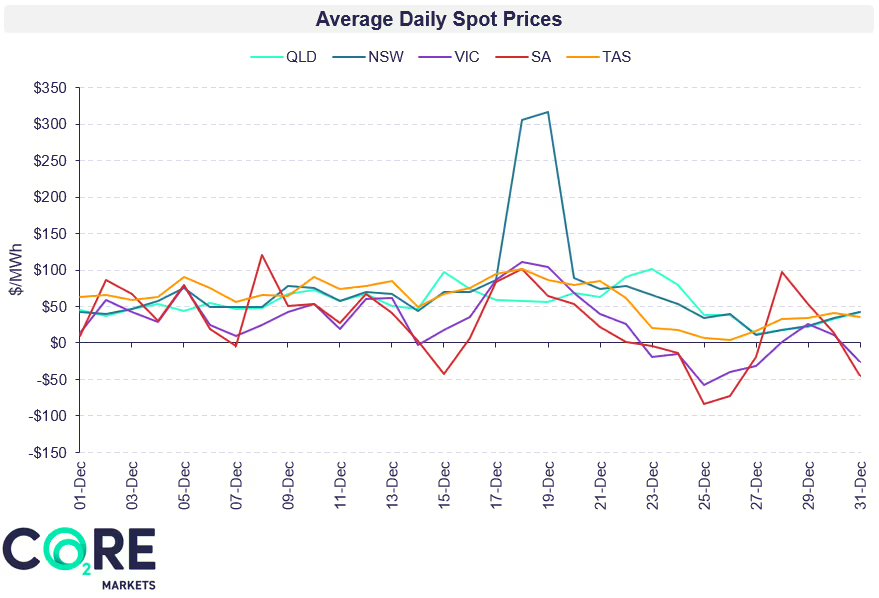
  • Diving deeper into December’s spot market trends, no market cap events occurred, while the frequency of negative priced intervals rose to the highest-level observed in 2025.
  • Negative prices accounted for 27% of all NEM-wide intervals in December, with the impact most pronounced in VIC and SA. Negative pricing occurred 39% of the time in VIC and 47% of the time in SA.
  • On 25 December, spot prices trended lower in SA and VIC due to low market demand. SA market demand declined materially, with Actual Minimum System load 1 (MSL1) and MSL2 notices triggered.
  • In contrast, on 18th December, demand exceeded forecasts and shifted materially in the evening, potentially linked to high cloud cover. Market demand rose toward 32,000 MW during the evening peak, while tight coal availability in NSW and low wind output drove a surge in pricing as reliance on gas-fired generation increased. By 19 December, conditions eased, however remained elevated as demand stabilised and generation availability improved.


Electricity futures market

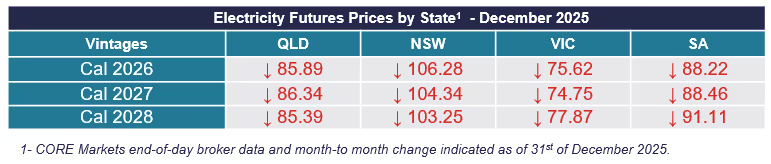
  • Cal26 and Cal27 contracts fell sharply in December. QLD Cal26 declined by -$7.09/MWh, while NSW Cal26 fell by -$4.65/MWh.
  • The forward curve softened further along the tenor, with Cal28 prices dropping materially, most notably in NSW where Cal28 fell by -$8.80/MWh.
  • Looking ahead, Q1 2026 forward prices also declined significantly despite Q1 typically trading at a seasonal premium as the highest-priced quarter of the year

Log in to the CORE Markets platform for more data, insights and commentary. Don’t have an account? Learn more

Renewables markets

NEM-wide variable renewable energy (VRE) penetration increased by 0.47% month-on-month to 42.72%, driven primarily by higher rooftop and utility scale solar generation.


Monthly rotating focus: Wind asset performance

Each month we feature a different asset type - rotating between coverage of solar, wind and BESS projects. This month’s focus is wind asset performance.

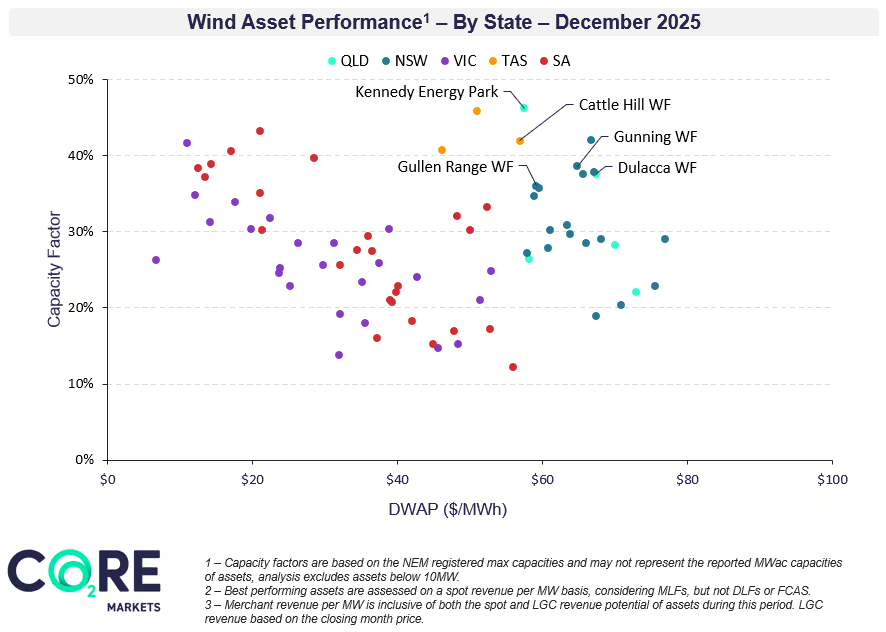
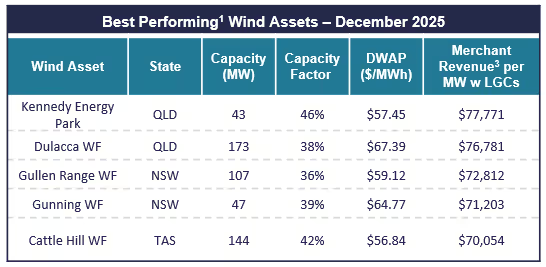
  • Average NEM-wide wind capacity factors rose to 28%, up 8.5 percentage points month-on-month. TAS was a notable outlier, recording a higher-than-average regional wind capacity factor of 43%. Generation from TAS’s four wind assets was 13% higher than the 2025 average.
  • Dispatch weighted average prices (DWAPs) increased across most states, with the NEM-wide average rising 17% month-on-month to $43/MWh. TAS wind farms experienced the largest increase by 95% to $51/MWh, underpinned by stronger spot market outcomes in that region.
  • Overall, average total merchant revenue per MW for wind increased by 20% compared to November, reaching $66.6k/MW/month. This was driven by stronger spot revenue, with TAS wind farms recording a 3-fold increase in spot market revenue.

Looking for more in-depth renewables asset analysis?
Learn more about our Wholesale Energy and Offtake Market Report, an important and recurring pulse check for renewable energy buyers and seller.

Environmental markets


Large-scale Generation Certificates (LGCs)

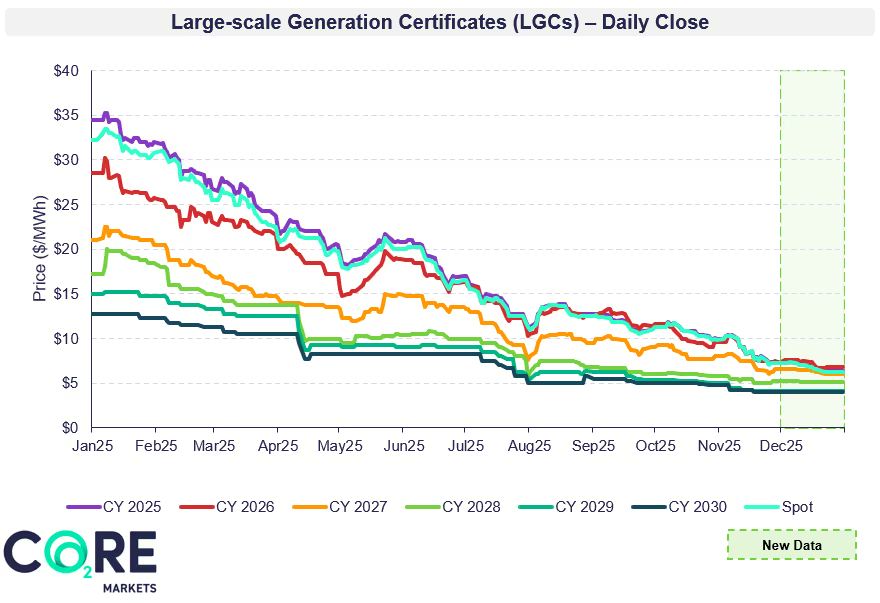
  • LGCs trended softer over the month, with early December firmness in Cal26 contracts giving way to persistent near-dated selling pressure.
  • Spot prices drifted from the low-$7/MWh range at the start of the month toward the mid-$6/MWh range by the 17th in response to gradually thinning liquidity and year-end selling.
  • Traded volumes were at the lowest monthly levels since April, the overall tone reflecting ongoing structural oversupply concerns.
  • Leading into the new year, a modest pricing rebound ahead of the early-February accounting period has been seen. The market remains in anticipation of whether the CER deadline in early Feb will lead to any additional demand influx.

Log in to the CORE Markets platform for more data, insights and commentary. Don’t have an account? Learn more


Small-scale Technology Certificates (STCs)

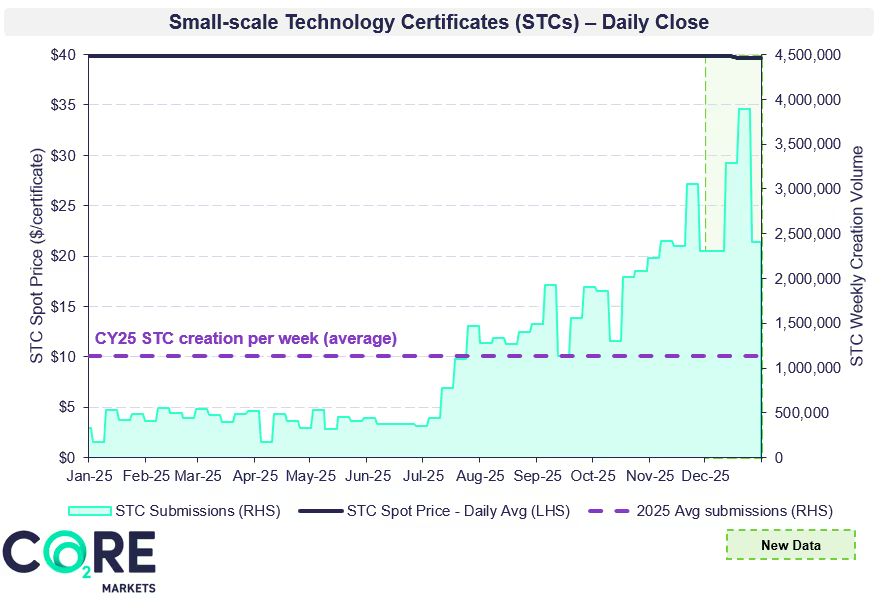
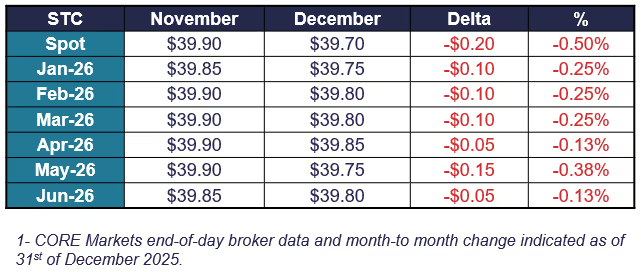
  • STC pricing remained largely anchored, with market dynamics being dominated across December by a steadily expanding Clearing House surplus.
  • This surplus grew from ~2 million certificates to well above 3 million by mid-month, weighing on seller sentiment.
  • Limited OTC trading activity was punctuated by a select number of forward trades. The build-up in surplus inventories leading into the end of CY25 reinforced the challenging backdrop for sellers, despite stable headline prices.
  • December's Clearing House build-up continued to deliver new price action in January, as the surplus swelled to > 5 million certificates into CY26.


Victorian Energy Efficiency Certificates (VEECs)

  • VEECs experienced the most pronounced price weakness among the efficiency schemes, with spot values sliding through $80/tCO2-e by mid-month.
  • Volatility was heightened in early-December following the release of CY24 surrender data. Thereafter, the spot market stabilised just below the $80/tCO2-e level, with the forward curve materially flattening once again as the market quickly moved to price the upcoming compliance periods conservatively.
  • Spot closed the month at $78.25/tCO2-e.


Energy Saving Certificates (ESCs)

  • The ESC market began December under continued selling pressure, extending November’s decline trend towards the low-$22/MWh range before stabilising mid-month.
  • A key inflection came on 17 December, as the NSW Government released its response to the Energy Savings Scheme statutory review. The announcement, signalling a more gradual reform pathway, prompting a brief spot surge to ~$23/MWh, though follow-through beyond this was muted as liquidity thinned into year-end.
  • Spot closed the month at $23.00/MWh.


Peak Reduction Certificates (PRCs)

  • PRCs were largely dormant for much of December, with wide bid/offer-spreads and minimal turnover until activity resumed on the 10th, when more than 270k certificates traded at $2.90. Liquidity injected in the wake of this later in the month consolidated prices at a level consistent with this initial trade.
  • On the 17th, the release of the Annual Scheme Rule Change initiated consultation on new activities, providing a constructive policy backdrop even as trading volumes remained episodic.
  • Spot closed the month at $2.88/certificate.

Looking for ACCU coverage? Read our ACCU Market Monthly Report here.
Log in to the CORE Markets platform for more market data, insights and commentary. Don’t have an account? Learn more

Market news

Gas Market Review

  • The Commonwealth Gas Market Review was commissioned to examine ways in which current gas market regulations can be improved to ensure domestic gas supply is delivered at a competitive price.
  • In addition, the Review also investigated ways to optimise the efficiency, transparency, and fairness of Australia’s gas markets so they are fit for purpose through the net zero transition.
  • Among its key findings, the Review concluded that existing gas market instruments are capable of effectively and appropriately responding to the needs of immediate action, however the regulation should evolve to provide energy security in the long-term.
  • Current instruments cannot guarantee or direct supply and do not collectively provide sufficient long-term certainty for investment and supply to gas market participants.
  • The emergency price mechanism introduced responses to the 2022 global energy crisis, has not been sufficient in placing downward price pressure on prices in a tight-supplied market.
  • Among its suite of recommendations, the most consequential proposal was the implementation of a domestic gas reservation scheme, which requires LNG exporters to reserve a portion of new production for domestic use. As a result, the mechanism would drive downward pressure on gas prices and decrease price volatility.
  • The Review proposed the reservation scheme would commence in 2027, leaving time to further consult on the detailed design of the reforms.

Final Nelson Review

  • On 16th December 2025, the NEM Review Panel released its final report, detailing its refined recommendations for strengthening short-, medium- and long-term markets to support better investment certainty and supply reliability in the NEM.
  • In its recommendations, the Panel continues to uphold the real-time spot market while identifying room for better visibility and participation by a broader range of price-response resources (e.g. consumer energy resources, demand response).
  • For medium-term markets, the Panel maintains its draft proposal of a market-making obligation (MMO) to improve contract liquidity, accessibility, and transparency – but notes that the MMO should only be triggered as and when a region reaches critical levels of contract liquidity for electricity services – with an immediate roll-out proposed in SA for cap contracts.
  • For long-term markets, the Panel maintains its draft proposal of an electricity services entry mechanism (ESEM) to help address the mismatch in contract tenor preferences between buyers and sellers – however, the Panel clarifies that the ESEM should consider regional market concentration of proponents as part of participation eligibility, thereby levelling the playing field for large and small entities.

What this month’s developments mean for market participants

Australian energy market

This month, the energy market recorded softer spot price outcomes alongside a broad-based softening in the forward curve. These conditions highlight risks for sell-side spot market exposed entities, particularly those with elevated merchant exposure and limited hedge cover.

Many asset owners may rely on PPAs, swaps, firm blocks, and other offtake mechanisms for revenue certainty. The lower merchant revenues for renewable energy projects may prompt further LGC sell-offs as asset owners actively manage cash flow and balance sheet positions.  

These contract mechanisms and in-depth market insights are outlined in CORE Markets’ latest offtake market report.

Subdued pricing in the spot market underscores the current opportunity for buyers to secure energy at more favourable price levels and the importance of implementing well-timed hedging strategies as summer volatility builds.

The CORE Markets team partners with renewable energy developers and corporate buyers to manage market risks.  Get in touch to explore how we can support your energy market approach.


Australian environmental markets

The LGC market continued its downward trend in spot and forward prices throughout December, reflecting ongoing weakness in the value of LGCs generated from both existing and upcoming renewable assets over the near to medium term forward horizons.

The STC market remained steady, supported by record-high certificate creations driven by the Federal Government’s Battery Rebate Scheme introduced in July 2025.

December PRC activity this month was dominated by a steadily expanding Clearing House surplus.

Staying ahead of these market and regulatory shifts will be key to optimising procurement and managing compliance costs effectively.

The CORE Markets team supports demand and supply side market participants in navigating these markets – across strategy, procurement and trading execution. Get in touch to learn how we can support your goals.

Do you need help navigating energy and environmental markets?

The events outlined in this month's update highlight the evolving nature of energy and environemental markets and the complexity of the net zero transition.

To discuss your unique requirements, get in touch with our team today to see how we can help.

Access this full article and more

Log in or register a free CORE Markets account to get closer to power, environmental and carbon markets with insights and updates from our experts.

Tags

Share this article

Receive more articles like this

You Might Also Like
Australian Energy & Environmental Market Update - December 2025
Market Update

Australian Energy & Environmental Market Update - December 2025

The latest edition of our monthly Australian Energy & Environmental Market Update is now available. Keep reading for energy and environmental price movements, policy updates and other news.
ACCU Market Monthly Update - December 2025
Market Update

ACCU Market Monthly Update - December 2025

This report provides an overview of the month’s Australian Carbon Credit Unit (ACCU) market activity along with key developments and milestones.

What’s already changing in Australia’s energy market as the NEM Review lands
Article

What’s already changing in Australia’s energy market as the NEM Review lands

As the NEM Review lands, attention rightly turns to system-level settings. But much of the commercial change shaping renewable and firming supply is already unfolding inside over-the-counter (OTC) energy markets. This article sets out what’s already shifting commercially in a market under review.