CORE Markets has launched Asset Intelligence, connecting renewable project data with power market context, commercial analysis, forecasting and risk modelling to support stronger asset and portfolio decisions.
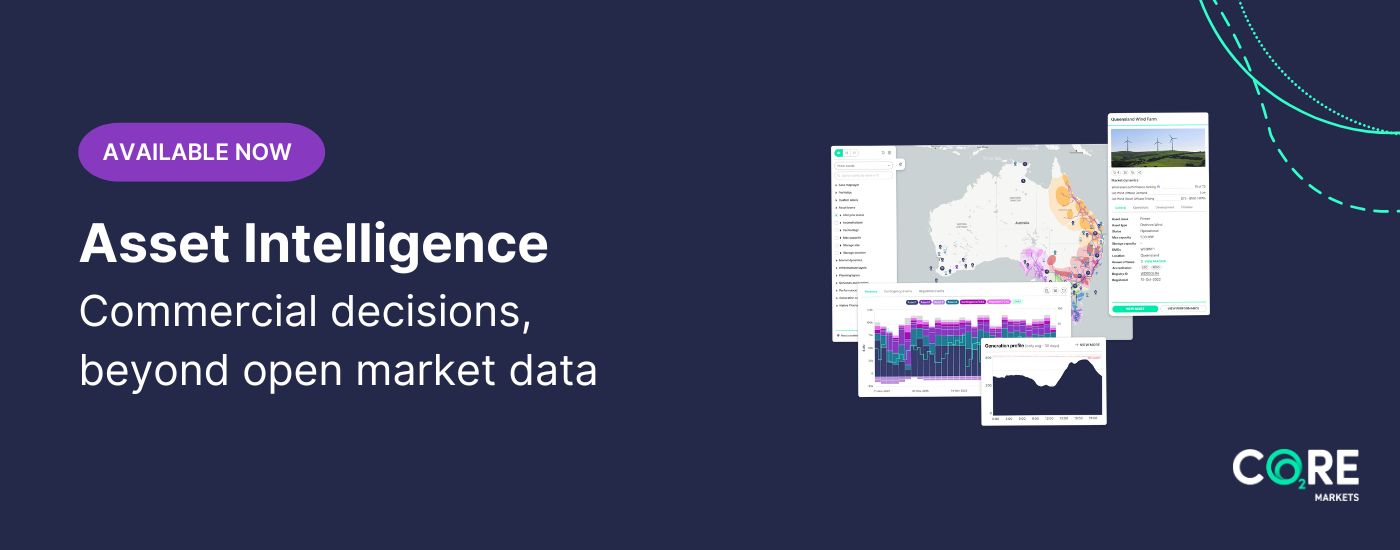
Australia’s power market is changing quickly. Renewable energy assets are not just assessed based on development timelines or project status. Teams also need to understand performance, revenue strategies, weather exposure, policy settings, offtake context, and broader market risk.
Different stakeholders in the value chain are often trying to answer the same investment and commercial questions from different starting points.
Development teams focus on project progress, approvals, ownership, network position, technology, location and execution risk. Commercial teams focus on revenue exposure, risk strategy, offtake opportunity and, of course, project finance.
As renewable assets move through development and into operation, teams need to assess performance through both technical and commercial lenses.
That’s why CORE Markets built Asset Intelligence, a new platform capability within the CORE Markets platform.
Asset Intelligence brings power market and project data, market intelligence, and risk and revenue data into one shared view. It gives teams critical commercial context for assessing price forecasts, revenue and risk modelling, offtake context and portfolio strategy.
Free preview access available for a limited time. See below for access details.
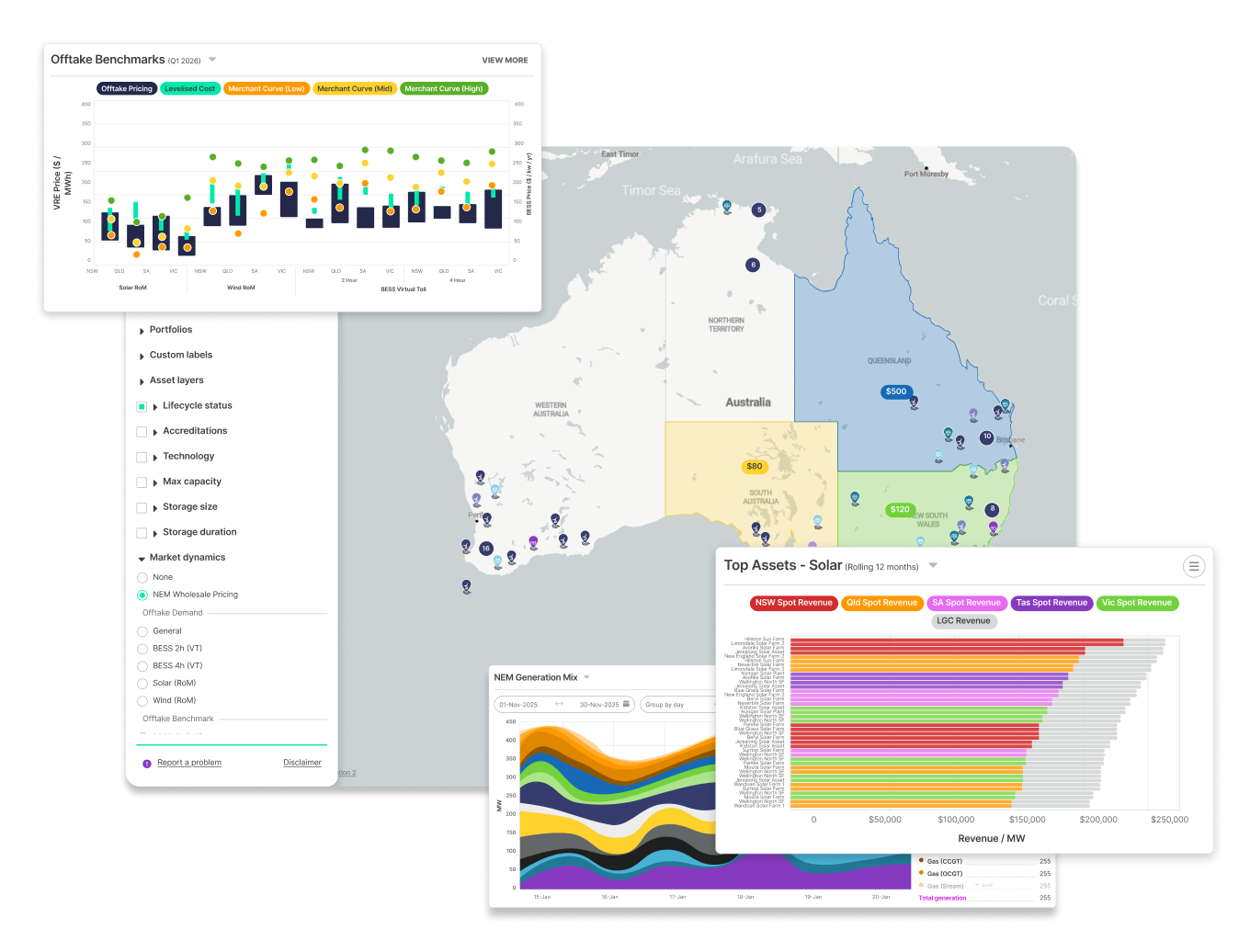
Asset Intelligence brings these inputs together in a single view, reducing the time teams spend gathering and reconciling information from separate sources and scenario analysis.
The value comes from connecting those layers.
Teams can move from asset screening to commercial assessment - modelling scenarios on how contracting, revenue, risk and market exposure affect the commercial view of an asset or portfolio.
That means teams can support deeper due diligence, test revenue assumptions, understand offtake context, compare market exposure or assess how an asset sits within a broader portfolio.
Asset Intelligence was developed to provide an increasingly interactive way to bring market, revenue, risk and offtake assumptions into the commercial view of an asset or portfolio.
Asset Intelligence is structured around four connected views: Portfolios and Scenario Analysis, Market Dynamics, Explorer and Asset Information.
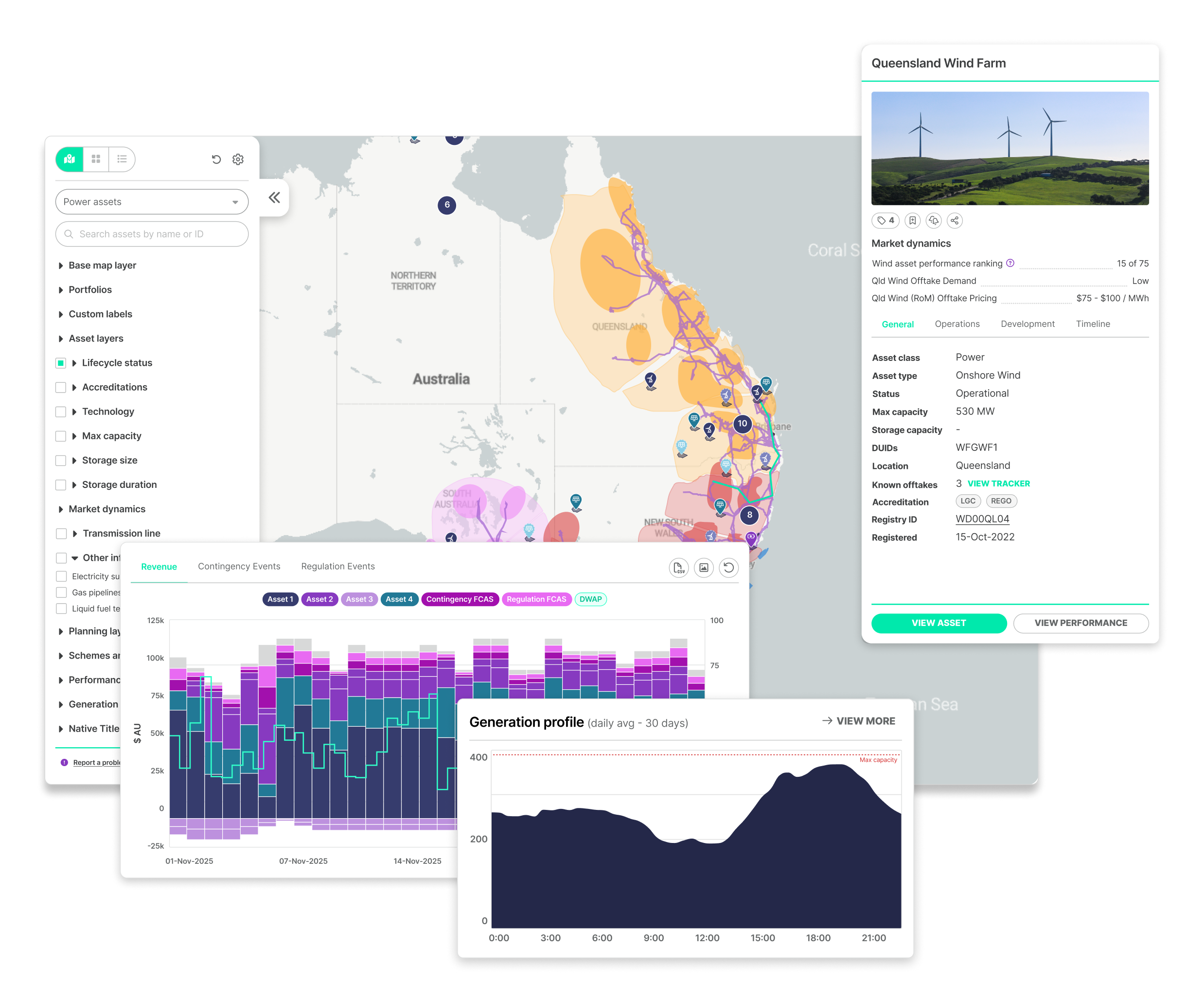
Asset Intelligence has been designed for the decisions that sit across development, investment, offtake and market participation.
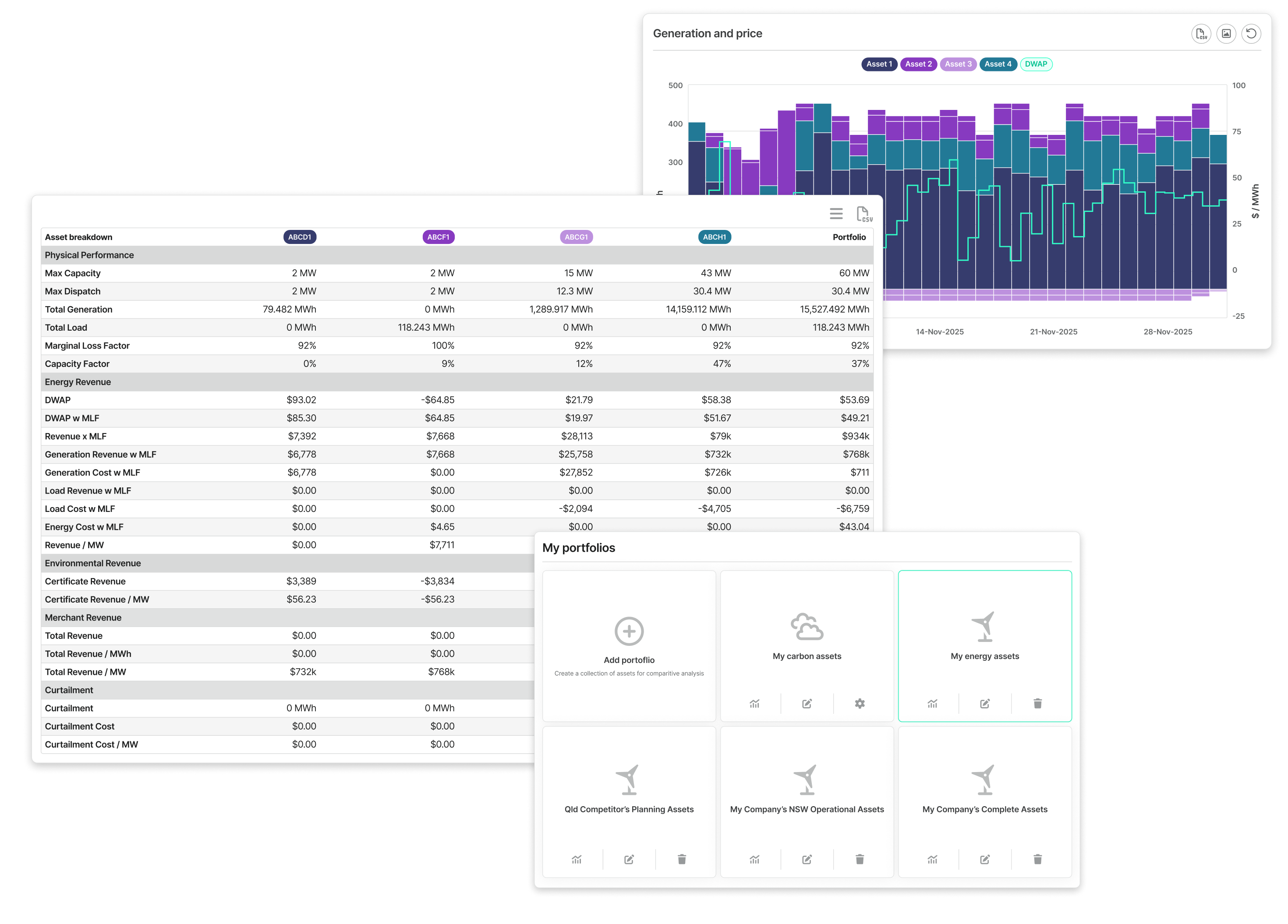
The CORE Markets platform already brings together market data, analytics and intelligence across power and environmental markets.
Asset Intelligence extends that platform experience by connecting renewable energy project information with power market context, commercial analysis, price forecasting, revenue and risk modelling, offtake context and portfolio assessment.
As power assets move through development and into operation, that commercial context becomes increasingly important – from how an asset performs, and contracts, to how it earns revenue and fits within a broader portfolio.
Asset Intelligence is now available through the CORE Markets platform. For a limited time, users of the CORE Markets platform can access a free introductory Asset Intelligence experience.
CORE Markets launches Asset Intelligence to support forward-looking commercial decisions in power markets

Log in or register a free CORE Markets account to get closer to power, environmental and carbon markets with insights and updates from our experts.

Capacity Investment Scheme (CIS) results have become a public reference point for renewable and storage projects. In this article, we look at what a winner list shows and the project and market signals that need closer review before the next tender or commercial decision.